Monetizing the Pre-Service Gap: Using Morning Meeting Space to Drive Midday Lunch Volume
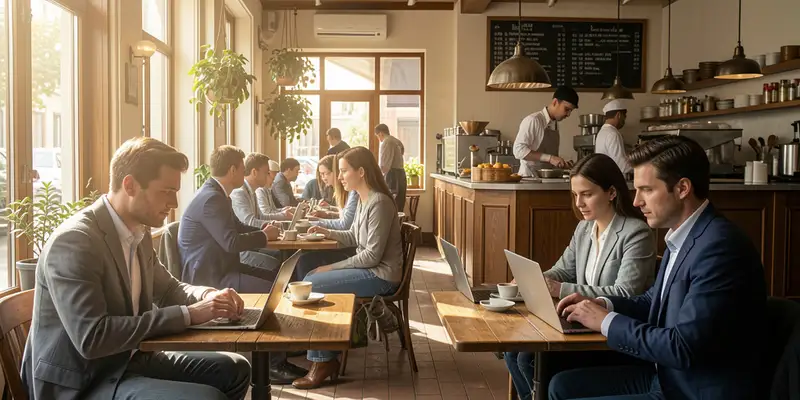
Convert idle dining room hours between 8:00 a.m. and 11:00 a.m. into a free community meeting hub to build local B2B relationships. This operational shift captures a captive audience for lunch conversion while utilizing staff already on-site for morning prep.
The Financial Drain of Idle Square Footage
Every hour your restaurant sits dark before an 11:00 a.m. opening is a missed opportunity to offset fixed overhead. Independent operators often view the morning hours as a “closed” period, but the reality is that your facility is already incurring costs. You are paying for the lease 24 hours a day. Your refrigeration units are humming, your HVAC system is maintaining a climate-controlled environment, and your taxes are accruing regardless of whether a single guest is seated. For most establishments, the 8:00 a.m. to 10:45 a.m. window is a dead zone where the building consumes resources without generating a cent of top-line revenue.
When you break down the cost per square foot, leaving your dining room empty during prime morning hours is a tactical error. Local businesses and community organizations are constantly hunting for professional, reliable spaces to gather. By opening your doors early, you are not just offering a room; you are capturing “mindshare” in your local market. The goal is to transform your physical location from a static eating house into a community infrastructure asset. This doesn’t require a full front-of-house staff or a functioning line; it simply requires the lights to be on and the door to be unlocked.
The skepticism around this approach usually centers on the “cost of service.” However, when you look at the numbers, the incremental cost of hosting a meeting is negligible compared to the potential Lifetime Value (LTV) of a new local regular. You are already paying for the space; now you are simply allowing it to work as a marketing funnel. This isn’t about selling eggs and bacon; it’s about positioning your brand as the “third place” for local professionals who will eventually need to feed their teams or host client lunches.
Operational Synergy: Integrating Prep Cycles with Passive Hosting
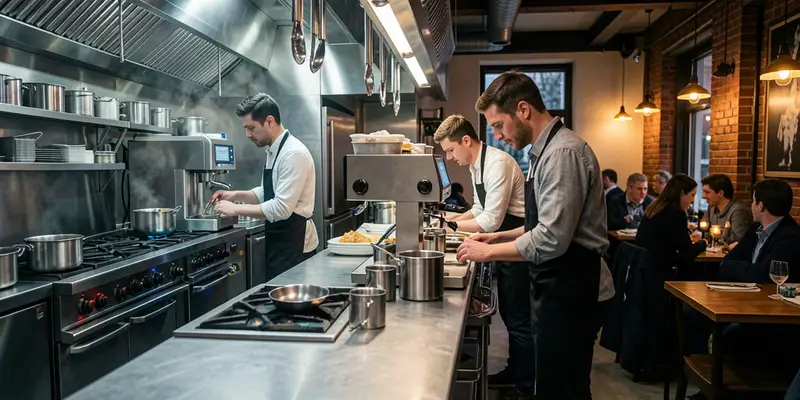
The most significant hurdle for any new initiative is the labor cost. However, most restaurants opening at 11:00 a.m. already have a “ghost crew” in the building by 8:00 a.m. Your prep cooks, dishwashers, and perhaps a kitchen manager are already on-site, firing up ovens, receiving produce deliveries, and beginning the arduous process of mise en place. The kitchen is alive with the sound of knives hitting boards and the hum of heavy equipment. This existing labor footprint means the building is already staffed and “active.”
Passive hosting means you don’t need a dedicated server or a hostess for these morning blocks. A single manager or senior prep person can be designated to unlock the front door and point meeting organizers to their reserved tables. Because the kitchen is focused on lunch prep, the front-of-house remains a quiet, professional environment suited for real estate briefings, non-profit board meetings, or local church planning sessions. The friction of “opening early” is mitigated because the back-of-house is already operational.
To make this work, you must define the boundaries of “Passive Service.” You are not providing a full-service experience. You are providing a “Space-as-a-Service” model. This distinction protects your prep staff from being pulled into front-of-house duties. You can set up a self-service station with water, or perhaps a thermal carafe of coffee, allowing the meeting attendees to remain self-sufficient while your team stays focused on the 11:00 a.m. “go-live” moment. This creates a low-pressure environment for both the staff and the guests.
The Targeted Lead Generation Strategy
Offering your space for “free” sounds counter-intuitive to a profit-focused operator, but it is actually a highly targeted customer acquisition cost (CAC). If you were to run digital ads to attract twenty local business owners to your restaurant, you would spend hundreds of dollars in ad spend with no guarantee of engagement. By offering a free meeting space, you are inviting those high-value targets to spend two hours inside your four walls. They are physically experiencing your atmosphere, smelling the prep work from the kitchen, and seeing your brand up close.
Targeting is the key to ROI. Focus your outreach on “High-Frequency Lunch Groups.” Real estate offices are the gold standard; they have large teams that need to meet weekly and they frequently order catering or host client lunches. Reach out to the office managers of every firm within a five-mile radius. Similarly, local non-profits and community organizations like the Rotary Club or local church committees often struggle to find consistent, quiet meeting spaces that don’t charge a $500 room fee.
The pitch is simple: “We don’t open until 11:00, but our space is ready. Use our dining room for your morning huddle at no charge. We’ll provide the water and the Wi-Fi; you bring the team.” This positioning removes the “salesy” feel and replaces it with community utility. Once they are in the door, they are no longer “prospects”—they are “guests.” The psychological barrier to trying a new restaurant is removed because they have already spent two hours in your booths.
Digital Readiness: Bridging the Gap from Meeting to Menu
The ultimate goal of morning hosting is the 11:00 a.m. conversion. As the meeting winds down at 10:45 a.m., the attendees should be thinking about their next move: lunch. This is where your digital infrastructure becomes your most powerful sales tool. You cannot rely on physical menus that might be tucked away or outdated. You need a way to put your offerings directly into their hands without interrupting their meeting.
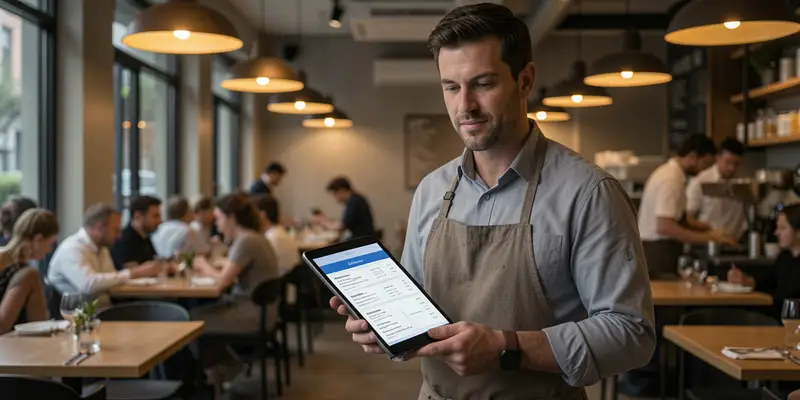
Using a platform like QR Menu Maker is the most efficient way to handle this transition. By placing a high-quality, branded QR code on every table, you allow meeting attendees to browse your lunch specials, seasonal pours, or “Quick-pick” menus while their meeting is still in progress. The AI-powered menu scanning feature allows you to take your standard paper menu and digitize it in seconds, ensuring that if a specific item is 86’d during morning prep, you can update the digital menu in real-time.
When the meeting ends, the transition to lunch should be frictionless. If they have already been looking at your digital menu for the last hour, the likelihood of them staying for a “Combo deal” or a “Seasonal roast” increases exponentially. You are moving them from a “Free Space” user to a “Paid Check” customer with zero friction. This is why having a shareable web link or a QR-accessible menu is non-negotiable; it turns a passive observer into an active diner before your staff even takes the first order.
Infrastructure Requirements for High-Value Meetings
To attract professional organizations, your space must meet a minimum viable standard for business operations. A dirty floor from the night before or a lack of power outlets will ensure they never return. You need to treat the 8:00 a.m. “Open” as a professional start time. Ensure the dining room is reset the night before. The tables must be wiped, the chairs must be straight, and the ambient temperature must be comfortable for people sitting and talking, not just for staff moving in a hot kitchen.
Wi-Fi is the “Essential Utility” of the modern meeting. If your guest Wi-Fi is flaky or password-protected with a complex 20-character string, you will frustrate your users. Create a dedicated guest network with a simple, brand-related password. This is a small technical hurdle that pays dividends in repeat bookings. Additionally, consider your power grid. If you have “dead zones” in your dining room where laptops can’t be charged, those tables will remain empty.
Beverage service is the final touch. You don’t need a barista on duty, but a high-quality, thermal coffee service can “sweeten the deal” as suggested. In the context of a brewery or taproom, this might mean offering hot tea or local coffee roasts. It costs you pennies per cup but creates a “hospitality” feel that separates you from a library or a sterile office lobby. This small investment in morning “amenities” builds the relationship equity needed to convert these groups into long-term catering or event clients.
Managing the 10:45 Transition and Squatter Risks
One of the primary fears of this strategy is the “Squatter Problem”—guests who take up a table for three hours, drink free coffee, and then refuse to leave or order lunch when the rush starts. This is an operational challenge that must be managed with clear, professional boundaries. Your “Free Meeting Space” offer must have a hard stop time—10:45 a.m. is ideal. This gives your team 15 minutes to reset any tables and prepare for the 11:00 a.m. sharp opening.
Communicate these boundaries clearly during the booking process. Whether you use a simple Google Calendar or a formal booking link on your website, the terms should state: “Space is available for complimentary use until 10:45 a.m. At 11:00 a.m., we transition to our full lunch service.” Most professional organizations respect these limits. In fact, many will feel a “social debt” to stay for lunch or at least order a few items to-go as a thank you for the space.
If a group does stay into the lunch hour, they must transition into “Paying Guest” status. This is where your front-of-house staff needs to be trained in the “Hand-off.” A simple, “We’re transitioning to our lunch menu now—would you like to see our specials for today?” is usually enough to signal the shift. By using digital insights from your menu platform, you can even see which items the morning crowd was browsing and offer targeted suggestions to help close the sale.
Scaling Through Community Integration
Once you have successfully hosted a few organizations, you must move from “hosting” to “integrating.” Don’t let the meeting end without a follow-up. Collect the email address of the meeting organizer. Add them to a “Local Business Partners” segment in your CRM. These are the individuals who will book your space for holiday parties, order $500 worth of sandwiches for a training seminar, and recommend your restaurant to their clients.
The long-term play is to become the “Default Choice” for your neighborhood. In a competitive market, food quality is often a baseline expectation; it is the relationship and the utility you provide that creates true loyalty. When a real estate agent has spent every Tuesday morning in your booth for a month, they aren’t going to the chain restaurant down the street for their client lunch. They are coming to you because you supported their business when your lights were already on and your kitchen was already humming.
This strategy is about maximizing the “Yield” of your physical assets. By opening the doors early, you are not adding significant labor or food costs; you are simply increasing the utility of your lease. In the high-margin, low-loyalty world of modern food service, being the “community hub” is the ultimate competitive advantage. It turns your “dark hours” into your most productive marketing window.
Frequently Asked Questions
How do I prevent morning guests from interfering with kitchen prep?
Keep the dining room and kitchen physically or psychologically separated. Ensure the kitchen staff understands that while the dining room is “open,” they are not on “service” duty. Use signage or physical barriers if necessary to keep guests out of prep areas.
What if a group wants to bring in outside food?
Establish a strict “No Outside Food” policy as part of the free space agreement. Since you are providing the space and potentially water/coffee at no cost, it is standard professional etiquette that they do not bring in competing products.
How do I market this to local businesses without a budget?
Direct outreach is more effective than broad advertising. Call the office managers of local businesses. Use LinkedIn to find “Community Coordinators” or “Office Administrators” within a 3-mile radius. A personal invitation to use the space is more powerful than a flyer.
Does this require additional insurance coverage?
Generally, your standard business liability insurance covers guests in your building during operational hours. Since your staff is already on-site for prep, these are considered “business hours,” but always verify with your provider that there are no “service-only” clauses in your policy.
How do I handle the cleanup between the meeting and lunch?
The meeting attendees should be responsible for their own basic cleanup (trash, etc.). Because they are not eating a full meal, the “mess” is usually limited to a few coffee cups or water glasses. Your 10:45 a.m. transition period should include a 5-minute “sweep” of the room by a staff member to ensure everything is “Lunch Ready.”
Frequently Asked Questions
How do I prevent morning guests from interfering with kitchen prep?
Maintain a clear distinction between the dining room and kitchen. Kitchen staff should focus on mise en place and prep, while the dining room remains a passive self-service area for the meeting guests.
What if a group wants to bring in outside food?
Strictly prohibit outside food in the terms of your space usage agreement. This protects your brand and ensures that the eventual conversion to your own lunch menu is the only food option available.
How do I handle the cleanup between the meeting and lunch?
Allocate a 15-minute buffer (e.g., 10:45 AM to 11:00 AM) to reset the dining room. Since no heavy cooking or full-service dining occurred, cleanup is typically limited to clearing beverage containers and wiping surfaces.