The Independent Operator’s Guide to Weaponizing Slow Days: 7 High-Margin Revenue Strategies
Stop letting Mondays and Tuesdays erode your monthly margins. This guide provides a technical blueprint for implementing direct corporate catering, high-margin day-part specials, and automated marketing funnels that drive off-peak traffic.
The Labor Arbitrage of Direct Corporate Catering
Mondays and Tuesdays are the traditional graveyards of the restaurant industry. While your front-of-house staff stands idle and your utilities continue to burn, your overhead is eating your weekend profits. However, the data across thousands of locations reveals a specific opportunity: 65% of all catering orders are corporate, and their peak demand hits on the exact days your dining room is empty.
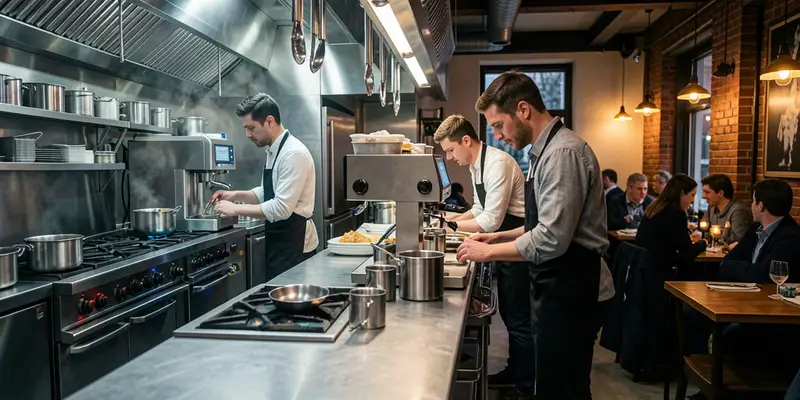
Catering is not just a secondary revenue stream; it is a high-margin necessity. Food sold in catering orders is twice as profitable as the equivalent food sold in single-seat orders. This is a pure labor play. Preparing a bulk tray of pasta or twenty identical burrito bowls is significantly less labor-intensive than managing twenty individual tickets with unique modifications and staggered firing times. To capture this, you must bypass third-party aggregators like EzCater, which tax your laziness with a 30% commission and strip you of customer data.
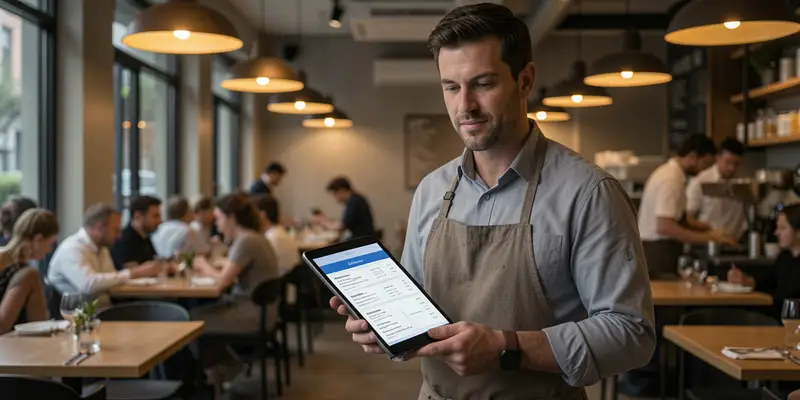
The most successful operators, like Mike Klock in Los Angeles, build a direct-to-consumer infrastructure. This requires a digital menu interface that supports per-person headcount ordering rather than just item-based shopping. When a corporate secretary is ordering for a board meeting of 20, they don’t want to do the math on how many ounces of protein they need; they want to select “20 people” and have the system calculate the volume. By integrating direct delivery networks into your own site, you maintain the relationship and the margin. Using a tool like QR Menu Maker to host a dedicated, shareable web link for your catering menu ensures that corporate decision-makers can access your current pricing and availability instantly without downloading a clunky PDF.
Engineering Slow Day Specials for Maximum Margin
The “Tuesday Slump” is a psychological hurdle for the consumer, not just a scheduling fluke. To break it, you need a recurring anchor that creates a sense of scarcity and routine. Omar at Talkin’ Tacos utilized “Taco Tuesday” to drive an additional $1,500 in volume per day. The brilliance here isn’t just the promotion; it’s the menu engineering.
Tacos, pasta, and pizza are high-margin, low-food-cost items. Offering a 20% discount on a dish with a 15% food cost still leaves you with a massive spread. If you are an American bistro, “Wine Wednesday” serves the same purpose—unloading inventory with high perceived value but low service friction. The mistake most operators make is discounting their entire menu. You should only discount the items that have the highest “velocity-to-labor” ratio.
To execute this properly, your digital presence must be dynamic. If you’re running a “Mozzarella Monday” and you run out of fresh supply by 7:00 PM, a static or printed menu creates a customer service nightmare. Real-time menu updates are non-negotiable. Platforms that allow you to toggle item availability or update pricing across all digital touchpoints in seconds—rather than reprinting physical cards—are what separate professional operators from amateurs.
Automating the Digital “Tap on the Shoulder”
Manual marketing is the first thing to die when the kitchen gets busy. If your marketing strategy relies on you remembering to post to Instagram or send an email every Tuesday morning, it will fail. Success in slow-day recovery requires automation that operates on autopilot.
Email marketing is often dismissed as “old school,” but for a restaurant, it is a direct line to your regulars. Automating a “Taco Tuesday” reminder to go out at 2:00 PM—exactly when office workers are starting to think about dinner—can drive a $500 lift in sales like clockwork. The email should do three things: show a high-quality visual of the special, provide a “reorder my favorites” button, and explicitly state the savings of ordering direct versus third-party apps.
When your menu is digitized through a platform like QR Menu Maker, you can easily link your automated emails to a clean, branded web menu that doesn’t force the user to zoom in on a photo of a physical menu. This reduces the friction between “seeing the email” and “placing the order,” which is where most conversion is lost.
High-Engagement Revenue: App Push Notifications
If email is a tap on the shoulder, a push notification is a whisper in the ear. With a 50% open rate within the first ten minutes, push notifications are the most aggressive tool in your digital arsenal. Because the click-through rate is five times higher than email, this is your primary weapon for “flash sales” on slow days.
The goal is to get the customer from the notification to the checkout in under 30 seconds. This is only possible if your system stores past orders and payment credentials. When a regular receives a notification about a Tuesday special, they should be able to click, hit “reorder,” and be done. This level of technical sophistication used to be reserved for Starbucks and Domino’s, but independent operators are now using integrated platforms to level the playing field.
By pushing these notifications on Mondays and Tuesdays, you are capturing the “decision fatigue” of your customers. They don’t want to cook, they don’t want to search; they want the path of least resistance. If your digital menu is professional, fast, and mobile-optimized, you become that path.
SMS Marketing and the Delivery Minimum Hack
Tim at Doo-Dah Diner in Wichita has proven that text message blasts can drive over $1,000 in additional sales on a dead day. However, there is a technical trap: delivery costs can eat the profit on a single-meal SMS promotion. The solution is the “Delivery Minimum” hack.
When sending a text blast for a “Free Delivery Tuesday,” you must build a minimum order requirement into the offer. This forces the guest to add an appetizer, a dessert, or a second meal to hit the threshold. You aren’t just driving a sale; you are inflating the Average Order Value (AOV).
This strategy relies on your ability to update your “Delivery” or “Specials” menu sections instantly. If you are using an AI-powered menu management system, you can create a temporary “SMS Special” category that only exists for the duration of the promotion. This prevents customers from trying to claim the deal on a Friday night when you don’t need the extra volume.
Live Music as an Atmospheric Customer Acquisition Tool
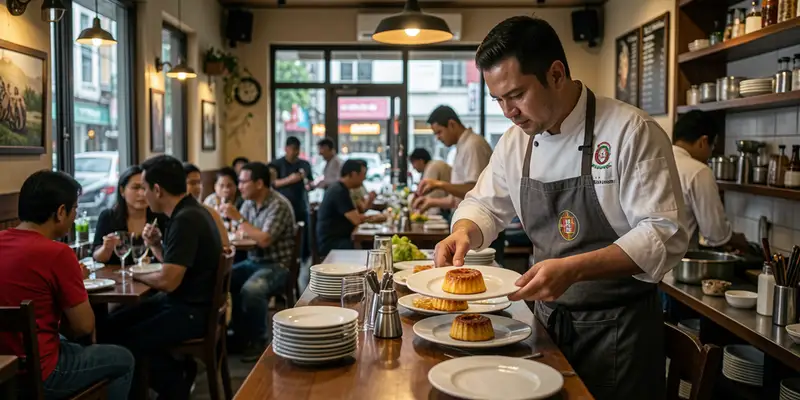
Physical “vibe” is a lever that digital-only brands can’t pull. Juliana at Sabor Oaxaca transformed her Mondays by introducing Mariachi Mondays. In major metros, there is an abundance of talented musicians willing to play for tips and exposure during off-peak hours. This creates a zero-cost (or low-cost) entertainment draw.
The ROI here is two-fold. First, it creates “Instagrammable” moments. When customers post videos of a live band in your dining room on a Monday night, they are doing your marketing for you. Second, it creates “curb appeal.” The sound of live music leaking onto the sidewalk signals to passersby that your restaurant is the only lively spot on a dead street.
To maximize this, you must coordinate your digital and physical presence. Your QR menus should have a small banner or “Event” section mentioning the live music schedule. This ensures that a customer who visited on a busy Saturday sees the Monday event and considers returning.
Game Nights and Building the “Third Place”
The final strategy for conquering slow days is social engineering through game nights. Unlike live music, which is a passive experience, game nights (like Bingo or Trivia) are active. They turn your restaurant into a “Third Place”—the social hub between home and work.
Nick Fosberg at Foley’s Bar and Grill used custom Bingo decks to build a robust Tuesday business. This works because it appeals to the demographic that is looking for social engagement on a night when most of their social circle is staying in. From an operational standpoint, game nights are excellent for driving high-margin beverage sales. People stay longer, they drink more, and they eat “sharing” plates that are easy for the kitchen to execute.
If you are running these events, your digital menu is your best communication tool. You can use QR Menu Maker to include a “Tonight’s Events” section right at the top of the menu. When a guest scans to see the price of a burger, they are immediately hit with the fact that Trivia starts in 30 minutes. It converts a transient diner into a long-term social regular.
FAQ: Solving Slow Day Operational Challenges
How do I manage pricing for corporate catering during periods of high inflation?
Static PDF menus are a liability. When protein prices spike, your catering margins can vanish overnight. You must use a digital menu system that allows for instant, real-time price updates. A web-based menu link ensures that every time a corporate secretary opens your link, they see the most current, margin-protected pricing.
Won’t 20% discounts on “Slow Day Specials” hurt my brand perception?
Only if you discount everything. By specifically targeting high-margin, low-labor items like tacos, pasta, or house wine, you are performing “yield management”—similar to how airlines price seats. You aren’t a “discount brand”; you are an “efficient brand” that rewards guests for dining during off-peak hours.
How do I handle the influx of catering prep without hiring more morning staff?
The key is “Menu Rationalization.” Your catering menu should only feature items that are already part of your standard prep list or can be prepped in bulk without specialized equipment. If a catering item requires a different station setup than your lunch service, it’s a margin-killer.
Is live music worth the potential noise complaints or licensing fees?
In most jurisdictions, “incidental” live music has different regulations than a concert venue. By partnering with local musicians for tip-based sets, you minimize the financial risk. Always ensure your digital menu includes a feedback link so you can monitor if the volume is negatively impacting the dining experience.