Transforming Dead Morning Hours into a Community Lead Magnet and Midday Revenue Engine
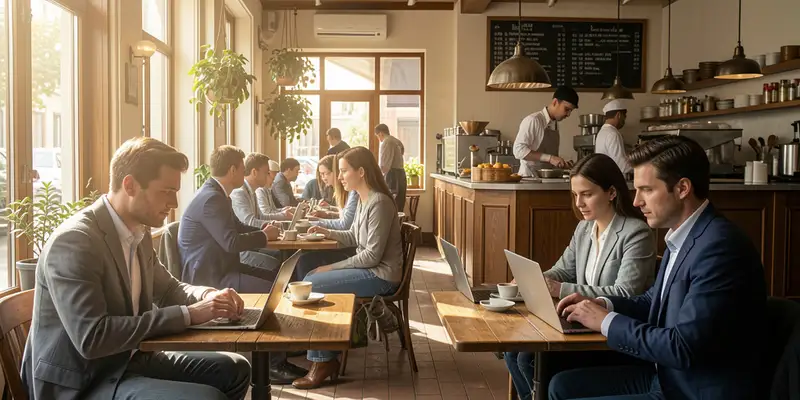
Eliminate morning dead-air by offering free meeting space to local businesses between 8:00 a.m. and 10:45 a.m. This strategy leverages existing prep labor to build community ties and secure high-intent lunch customers.
The Mathematical Reality of Morning Dead Air
If your doors stay locked until 11:00 a.m., you are bleeding overhead every single morning. Your HVAC system is likely already pulling 72 degrees, your prep cooks are in the back clanging 20-quart stock pots, and your refrigerators are humming at full power. You are paying for the square footage, the lighting, and the insurance, yet the front-of-house sits like a ghost town. This is a massive failure of asset utilization. Most independent operators look at those three hours—8:00 a.m. to 11:00 a.m.—as a necessary “quiet time” for the kitchen to get ahead of the lunch rush. In reality, that dining room is a depreciating asset that could be generating future revenue.
Opening your space as a free meeting hub during these hours costs you nearly zero in marginal expenses. Your staff is already on the clock. The water is already running. By inviting the community in, you change the physical energy of the building. A dark restaurant looks closed and uninviting to passersby. A lit restaurant with people inside, even if they aren’t paying a cover charge, signals life and vibrance to the neighborhood. This creates a psychological “halo effect” for your brand. When those meeting attendees think about where to eat later, your restaurant isn’t just a place they saw on a map; it is a place where they successfully closed a deal or planned a charity event.
The skepticism from most owners comes from the fear of distraction. You worry that a local nonprofit group will interfere with your line cooks’ focus or that a real estate office will demand full service when you only have a skeleton crew. This is an operational hurdle, not a dealbreaker. You set the boundaries: “Self-service water and coffee only, space available until 10:45 a.m. sharp.” By 10:45, your floor staff should be doing their final sweep before the 11:00 a.m. opening. You aren’t running a full-service cafe; you are providing a professional environment that would otherwise cost these groups hundreds of dollars at a dedicated co-working space or hotel ballroom.
Strategic Prospecting for High-Value Local Partners
You cannot just put a sign in the window and expect the right crowd. You must proactively hunt for the organizations that have the highest likelihood of staying for a $20 lunch. Real estate offices are the “whale” in this scenario. Realtors are constantly mobile, they have high discretionary spending, and they are always looking for neutral ground to meet clients or hold weekly team huddles. When you reach out to a local brokerage, you aren’t asking for a favor; you are offering them a free professional amenity. You are solving their problem of noisy home offices or the expense of renting conference rooms.
Beyond real estate, your targets should include local chambers of commerce, church leadership boards, and non-profit committees. These groups are the backbone of community word-of-mouth. If the head of a local animal shelter holds their board meeting at your long-top table every Tuesday, they become an unofficial ambassador for your business. They see the “Seasonal pours” on your tap list or the “Fresh bake schedule” on your digital menu boards as they walk in. They are exposed to your brand for two hours of high-concentration time. That level of “mindshare” is impossible to buy with traditional Facebook ads or mailers.
To manage this without adding administrative bloat, use a simple digital sign-up or just a dedicated email alias. Don’t overcomplicate the booking. Tell them the space is theirs for free, provided they respect the 10:45 a.m. exit time. This hard cutoff is critical. It ensures your staff can perform the final “theatre” of opening—lighting candles, adjusting the music, and doing the final table wipes—without a straggling meeting attendee lingering in the corner. If they want to stay past 10:45, the conversation shifts naturally: “We’re opening for lunch service now—would you like to keep this table and see our midday specials?”
The “Loss Leader” Beverage Strategy
The transcript suggests “sweetening the deal” with free coffee, tea, or water. From a consultant’s perspective, this is your most potent conversion tool. We aren’t talking about artisanal pour-overs that take your prep staff away from their dicing. We are talking about high-volume, commercial-grade airpots of coffee and a self-service water station with citrus garnishes. The cost of a few gallons of coffee and some filtered water is pennies compared to the potential Lifetime Value (LTV) of a new customer.
This gesture of hospitality removes the “transactional” feel of the meeting. In a coffee shop, attendees feel pressured to keep buying lattes to justify their seats. In your restaurant, you provide the space and the basic hydration for free, which creates a “reciprocity bias.” When people receive something of value for free, they feel a psychological urge to return the favor. In the restaurant business, that “favor” manifests as ordering a round of sandwiches at 11:00 a.m. or booking a holiday party three months down the line.
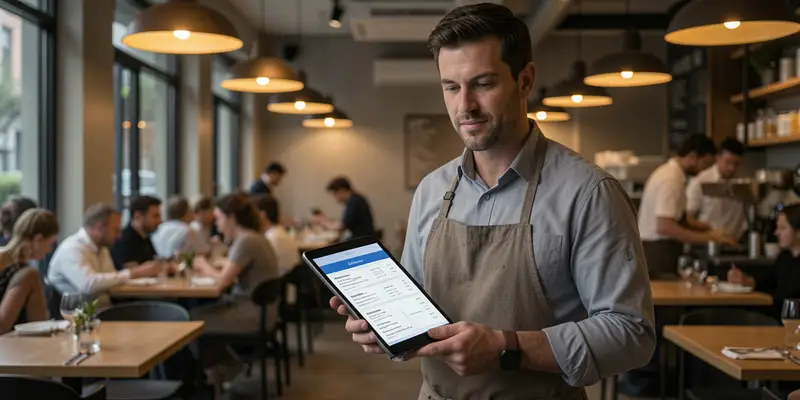
To maximize this, ensure your digital menu is accessible at every seat. This is where a tool like QR Menu Maker becomes an operational necessity rather than a luxury. Since you don’t have full waitstaff on the floor during these morning hours, you can’t have someone explaining the daily specials. A QR code on a small table tent allows meeting attendees to scan and browse your “Quick-pick menu” or “Meal upgrades” while they are waiting for their colleagues to arrive. They can see high-resolution photos of your best-selling items, which plants the seed of hunger long before the kitchen actually opens for service. If they see a “Combo deal” or a “Seasonal roast” while they are sipping their free coffee, the odds of them staying for lunch increase by 40-60%.
Managing the Sensory Conflict of Prep and Meetings
The biggest operational risk of this strategy is the “Back-of-House vs. Front-of-House” collision. A restaurant at 9:00 a.m. is often a place of loud music, heavy cleaning chemicals, and the aggressive prep of pungent ingredients like onions, garlic, or seafood. If you are going to host a local business meeting, you must curate the environment. You cannot have a prep cook blasting heavy metal in the open kitchen while a nonprofit board discusses their annual budget. This requires a “Morning Protocol” for your staff.
You must designate a “meeting zone” that is furthest from the heaviest kitchen noise. Instruct your prep team to handle the “quiet” tasks during these hours—portioning, dough prep, or salad dressing emulsification—and save the high-decibel tasks like meat grinding or industrial blending for after 11:00 a.m. or before 8:00 a.m. Furthermore, ventilation is your best friend. If your dining room smells like the floor degreaser you used at 7:00 a.m., it will drive people away. You need a neutral, professional scent profile.
The presence of guests in the morning also forces a higher standard of cleanliness from your team. Usually, during morning prep, the dining room is a staging area for linen deliveries or half-unpacked produce boxes. By opening for meetings, you demand that the front-of-house is “show-ready” by 8:00 a.m. rather than 11:00 a.m. This discipline actually improves your overall operations. It ensures that when the first “real” lunch customer walks in at 11:01, the restaurant doesn’t just look ready—it has been warmed up and active for three hours. The staff is already in a “service mindset” rather than a “task mindset.”
Transitioning Meeting Attendees into Lunch Revenue
The pivot from “meeting space” to “revenue-generating table” must be seamless. At 10:30 a.m., your lead server or manager should do a “soft pass” of the room. This isn’t a hard “get out” message; it’s a hospitality check. “Good morning, everyone. We’re about 15 minutes away from our lunch service. We’ve updated our digital menu with a few new seasonal pours and a fresh batch of our signature pastries. Would you like to see the lunch menu or keep this table for a midday meal?”
Because you’ve used QR Menu Maker to digitize your offerings, the transition is frictionless. You don’t have to hand out sticky, laminated menus that have been sitting in a stack. The attendees can stay on their phones or laptops, scan the code, and see the real-time availability of items. If a “Rotating keg” just got tapped or a “Daily pastry” just came out of the oven, you can update that on the fly. This real-time capability is crucial for high-conversion lunch service.
If a portion of the group decides to stay, you’ve just secured a “base” of covers before you’ve even officially opened. In the restaurant industry, “crowd begets a crowd.” A person walking by at 11:05 a.m. who sees three tables already eating and laughing is much more likely to enter than if they saw an empty room. These morning meetings act as “seat fillers” that prime your lunch rush for success. Even if only 20% of the attendees stay, the data and relationship-building you’ve done with the other 80% will pay dividends in the form of future dinner reservations and catering orders.
Long-Term Community Brand Authority
In the age of third-party delivery apps and ghost kitchens, the physical restaurant space is your greatest competitive advantage. Large chains can’t easily offer “free community meeting space” because of rigid corporate policies and liability fears. As an independent operator, you can be the “Town Square.” This strategy positions you as a pillar of the neighborhood. You are the person who helped the local Little League plan their season or the real estate agent close their biggest deal of the quarter.
This level of community integration creates “defensive” brand loyalty. When a new shiny franchise opens down the street with a million-dollar marketing budget, they cannot buy the three years of morning coffee and meeting space you’ve provided to the local business owners. Your customers become your protectors. They will choose your “Independent Restaurant” over a generic outlet because they have a personal, professional history within your walls.
Furthermore, these morning hours provide a perfect testing ground for new menu concepts. If you are considering adding a “Coffee flight” or a “Quick-pick menu” for commuters, you can run these as “beta tests” for your morning meeting groups. Use the insights and analytics dashboard from your digital menu platform to see what people are clicking on during those hours. Are they looking at the heavy burgers, or are they gravitating toward the “Seasonal roast” and lighter fare? Use this “Dead Air” time to gather intelligence that will make your main service hours even more profitable.
Frequently Asked Questions
How do I handle the liability of people in my building before official hours?
You should check with your insurance provider, but generally, “invitees” for a meeting fall under your standard commercial general liability. To be safe, have a simple “Space Use Agreement” for recurring groups that stipulates you are providing the space as-is and they are responsible for their own conduct. This doesn’t need to be a complex legal document; a one-page “House Rules” sheet usually suffices.
What if the meeting groups don’t buy anything and just leave at 11:00?
This will happen, and you have to accept it as part of the strategy. However, the cost of their “free” stay is negligible (some water and a few lights). Even if they don’t buy today, they are now familiar with your layout, your staff, and your menu. The “marketing” value of having 10 local professionals in your building for two hours far outweighs the $2.00 in coffee beans you spent.
Do I need a full kitchen staff for this?
No. This strategy relies on your existing prep schedule. Your kitchen staff should be doing exactly what they were already doing—preparing for the 11:00 a.m. open. The only difference is that they must keep their workspace professional and manage their noise levels. You don’t need a line cook on the station until your normal start time.
How do I stop groups from overstaying their welcome?
Communication is key. When they book the space, and when they arrive, remind them: “The space is yours until 10:45, at which point we have to reset for our lunch guests.” At 10:40, your staff should begin a visible “reset” of the nearby tables. Most professional groups will take the hint and either pack up or ask to be converted into a lunch table.
Frequently Asked Questions
How to handle the conflict between kitchen prep noise and business meetings?
Designate a meeting zone far from the kitchen and implement a 'Quiet Prep' protocol where loud tasks like blending or grinding are scheduled before or after the 8:00 AM to 10:45 AM window.
What is the cost-benefit of giving away free coffee and water?
The marginal cost is pennies per guest, while the psychological 'reciprocity bias' significantly increases the likelihood of attendees staying for a paid lunch or returning for future dinner service.
How do you transition 'free' guests into paying lunch customers?
Perform a 'hospitality check' at 10:30 AM, highlighting daily specials and offering to keep their table for lunch service. Use QR codes to allow guests to browse the menu seamlessly during their meeting.